


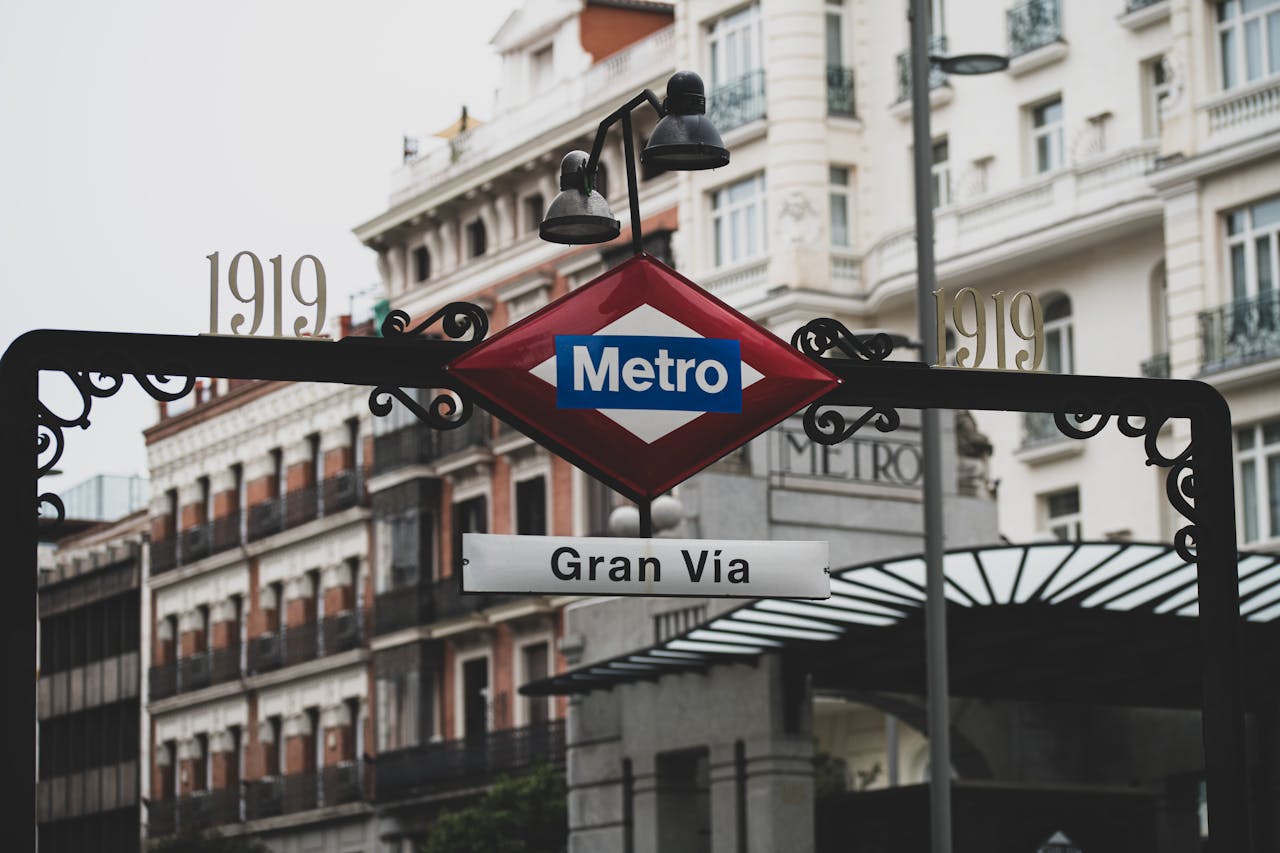
Madrid is a city of noise, sunshine, and movement, where life always seems to be moving at full speed on the surface. However, if you stop for a second to think, you will realize that beneath the asphalt we walk on every day, there is another city sleeping. I’m not talking about pipes or the modern subway, but a world of shadows, forgotten stories, and silences that break with the chaos of the street. Organizing a underground Madrid route is the best excuse to play explorer without leaving the city center, discovering the secrets that the capital has jealously guarded for decades.
Discovering the route through underground Madrid route and its past
To understand why there are so many things underground, you have to travel back in time to when Madrid was a city that had to make do with what it had. The subsoil was filled with tunnels and passageways not on a whim, but out of necessity: water had to be brought in from the mountains and, later, protection had to be found from bombing raids.
It is curious to think that, while we build ever taller buildings, the memory of the city remains intact, almost frozen, beneath them. Going down there is like entering a time bunker where the pace of history changes completely and you can feel the anguish and ingenuity of those who came before us. If you dare to go down, I promise you the feeling is unique. Let’s take a look at the three places you can’t miss if you really want to get to know the city’s inner workings:
1. Shelter 127 on Fuencarral Street
Imagine you’re walking down Fuencarral, window shopping, and suddenly you go down some stairs and find yourself in 1937. That’s what it feels like in Shelter 127. It’s one of the best-preserved air-raid shelters in the city, and stepping inside gives you real goose bumps. As soon as you walk through the thick door, the noise of traffic fades away and the damp silence of the past takes over. The brick walls are still there, the stone benches are still in place, and even the old signs telling women and children where to sit are still stuck on the walls.
It’s very moving to walk through these dimly lit corridors and think about the number of people who spent entire nights here, afraid that a bomb would fall. It is not a cold museum where you look at things behind glass; it is a place that makes you feel the cold, the dampness, and the tension that permeated Madrid during the war. Walking around there makes you greatly appreciate the tranquility of the street right above your head.
2. Chamberí Station: Platform 0
Chamberí is probably the most photogenic place in the entire underground. It was closed in the 1960s because the new trains didn’t fit on the platform, and that saved it. As it was closed for forty years, nobody touched it, nobody painted it, and nobody modernized it, so when you enter it now, it’s as if you’ve been teleported to another era. The first thing that catches your eye are the old advertisements painted on the tiles: advertisements for Nutella, soaps, and medicines that no longer exist, with colors that look as fresh as yesterday.
The most magical thing is that it is still a working subway station, but without passengers. If you stand quietly on the platform, you will see the trains on Line 1 speeding by through the windows, but without stopping. It is an almost ghostly feeling, as if you were an intruder in a world that continues to function without you. Seeing the wooden benches, old ticket booths, and original decor makes you imagine what life was like in Madrid in the past, when things seemed to move more slowly.
3. The Bunker in Plaza de Colón
Finding a bunker in one of Madrid’s most expensive and modern squares is quite amusing. Just below the Colón garden, surrounded by skyscrapers and luxury stores, there is a pure concrete structure that withstood the bombings. It is a rough, unadorned place, designed solely for survival. The difference between above and below is stark: above are cars and luxury, and below you are surrounded by gray walls over a meter thick.
This place stands out because you can see the “wounds” of war in the concrete. The graffiti made by the workers themselves in 1937 has been preserved and restored. It is a very visual history lesson. Walking through the galleries and seeing the embrasures where the anti-aircraft guns fired gives you a very real perspective on what the defense of Madrid was like. It’s hard, but you need to see it to understand the resilience of this city.
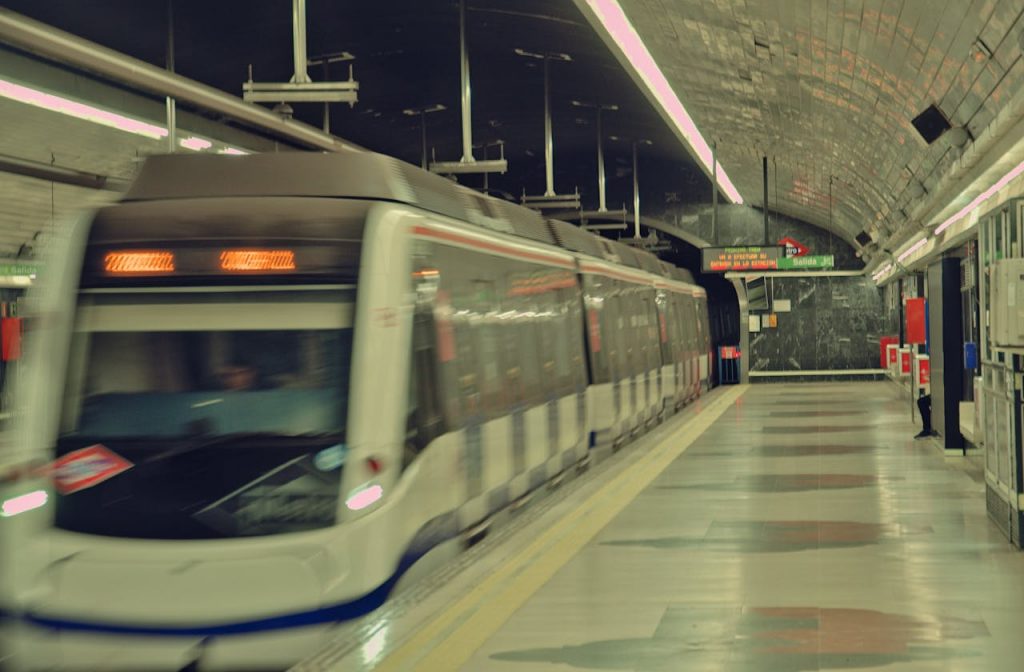
What nobody tells you about visiting (and how to survive it)
Now that you’re eager to go, there are a few things you need to know so that your visit doesn’t turn into a headache. Going underground in Madrid isn’t like walking into a shopping mall; there are logistics, rules, and some peculiarities that, if you don’t take them into account, can ruin the experience.
First and foremost: forget the idea of just showing up and walking in. It doesn’t work that way, as the capacity of the sites is ridiculously small compared to the number of people who want to see them, so booking online in advance is a must. For both Chamberí and Refugio 127, get your tickets on the Metro website a few days in advance. And be careful with your clothing: it may be 30 degrees outside in the middle of July, but it’s constantly cool underground. Always bring a light jacket or sweater, because you’ll be standing still for an hour in damp places and you’ll end up shivering if you’re wearing short sleeves.
Footwear is another key point. Forget flip-flops or new shoes. You’ll be walking on floors from the 1930s, 1940s, and 1950s, which are uneven, sometimes bumpy, and always hard. A good pair of sneakers will save the day. Finally, think about mobility. Almost all of these places are old and, unfortunately, are not accessible for wheelchairs or baby strollers because there are only stairs. It’s a shame, but it’s the reality of old architecture, so keep this in mind before planning your route if anyone in your group needs help getting around.
Conclusion
Taking this tour of underground Madrid is undoubtedly the best way to shake off the feeling that you’ve already seen everything this city has to offer. It rekindles your curiosity and makes you look at the streets with new eyes, knowing what lies hidden beneath your feet. It’s an intense experience, yes, but one that connects you with living history in a way that no textbook could ever achieve.
When you come back up to the surface and are dazzled by the Madrid sun, you’ll need a place to relax and talk about what you’ve seen. At Vitium Hotels, we’re waiting for you with open arms to offer you the comfort you need after so many stairs and so much history. Come and relax with us in one of the luxury rooms in Madrid that we have available for you.